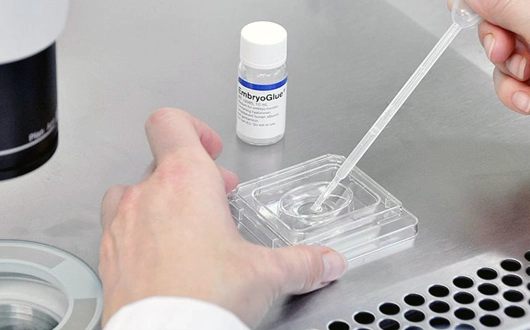
Various methods have been developed to increase the success rate of in vitro fertilization (IVF) treatments. Despite all these technological advancements, embryo implantation remains one of the most challenging stages in IVF treatment. Therefore, different applications have been tested in embryo culture media to increase embryo implantation rates.
Embryo glue is a special embryo culture medium containing a high concentration of hyaluronate, used to enhance the embryo's implantation potential. Compared to standard embryo culture media, embryo glue contains higher levels of albumin and hyaluronate.
Embryo glue can be used in the transfer of embryos at different developmental stages, including day 2, day 3, blastocyst, or embryos at day 5 or 6 following biopsy. Recent scientific studies have shown that embryo transfers with embryo glue result in higher pregnancy rates, leading to its increased use today.
According to scientific studies conducted so far, the use of embryo glue can increase the chances of bringing a baby home by up to 20%.
Embryo glue application can be more effective in improving embryo implantation.
Before applying embryo glue in IVF treatment, the embryologist selects the best embryo to transfer and keeps it in the embryo culture medium. The substance hyaluronate, which is highly present in the embryo glue solution, penetrates the outer membrane of the embryo, helping the cells to adhere more tightly to each other and attach to the uterine lining. As a result, the embryo moves less and finds it easier to implant into the uterine lining.
The use of embryo glue depends on the preferences of the doctor and the embryologist responsible for the laboratory at the IVF clinic. In our clinic, embryo glue is routinely recommended.
The substance hyaluronate in embryo glue is also found in the woman's follicular fluid, fallopian tubes, and the fluids within the uterus. Therefore, the application of embryo glue does not have any harmful effects on the embryo.
According to studies compiled by the Kohreyn library in 2010, 2014, and 2020, applying embryo glue during embryo transfer increases the chances of one additional pregnancy per every 14 embryo transfers.
According to a 2019 study by Kandari and colleagues, applying embryo glue before embryo transfer reduces the rate of miscarriage in pregnancy.
While the application of embryo glue increases embryo implantation and pregnancy rates, it does not guarantee a successful outcome from embryo transfer.
The special embryo culture medium called "embryo glue" contains the same ingredients in every clinic. However, the duration for which the embryo is kept in this specialized embryo glue medium and the amount of glue used may vary between clinics.
The prices for embryo glue can vary between clinics. The main reason for this is the varying amount of embryo glue used during the embryo transfer process.
Dear couples and readers, you can review our topics below for all your questions about IVF treatment and infertility and answers to any questions you may have. All you wonder about IVF, infertility and gynecological diseases...

In vitro fertilization, also known as in vitro fertilization, is the process of combining eggs and sperm in a laboratory environment and transferring the resulting embryo to the mother's uterus.

When success is expressed as pregnancy rate, it is generally known to be inversely proportional to increasing age. As the woman's age increases, the success rate of IVF decreases.
The AMH hormone, which indicates low egg reserve, is secreted from preantral egg cells, called precursor egg cells, in the ovarian tissue of women.
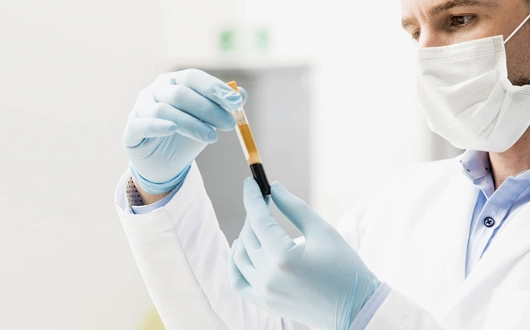
The use of PRP in the field of reproductive medicine has increased and become popular. Low ovarian reserve, menopause and endometrium (inner sheath of the uterus) have become new areas where PRP is used.
Copyright 2026 Prof. Dr. Cem Çelik. Obstetrics, Gynecology, and IVF (In Vitro Fertilization). All rights reserved.

 Prof. Dr. Cem ÇelikObstetrics, Gynecology, and IVF (In Vitro Fertilization)


 +90532 514 9387
 About Me
 Contact